“Studying the Alexander Technique with Steve is one of my favorite things each week. He’s a body whisperer who coaxes diminishing habits away and introduces the body to a better way. As an athlete I am less sore, as a singer I have more resonance, and as a lawyer I am more in command.”

The Alexander Technique is a rich study of posture, breathing, and movement.
What is the Alexander Technique?
All of us develop patterns over time – patterns of tension, movement, and being – that get tangled up and quietly shape how we move and how we feel.
The Alexander Technique helps you get untangled. It empowers you to clarify communication between mind and muscle so that you can decide which patterns to encourage, and which ones to prevent.
The idea at the heart of the work is simple: things are already a certain way, and wouldn’t it be nice to know how things are, so that we can make choices.
People come to the Alexander Technique for many reasons, but usually it’s because something hurts. It’s well known among musicians, dancers, and actors, and I’ve also worked with surfers, cyclists, and sommeliers. That range is a good reminder that the Alexander Technique isn’t a special exercise or a particular posture. It’s a practical way of using yourself with more connection and ease in whatever you do.
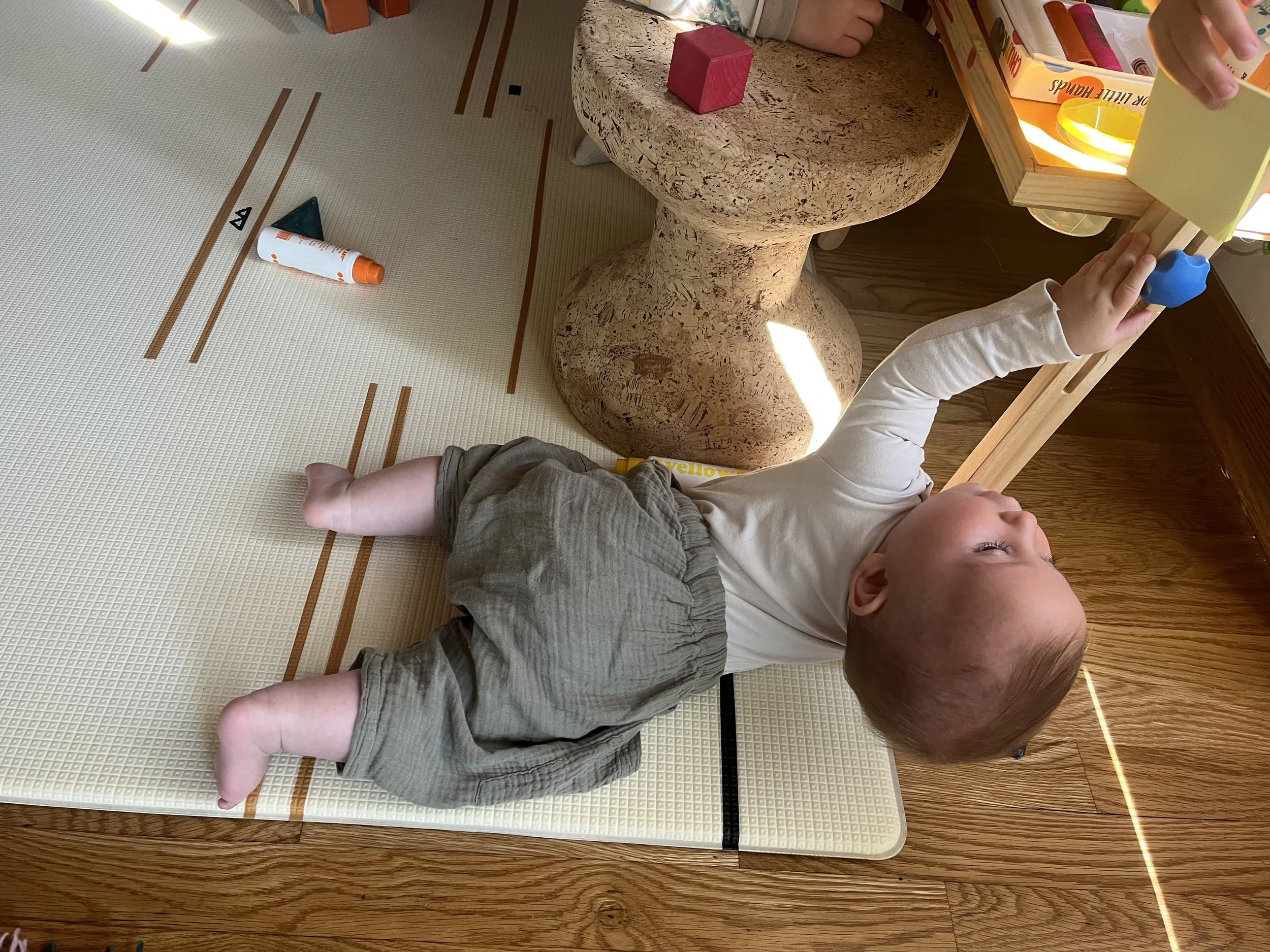
Developmental Movement
If you watch a baby, she doesn’t lift her head to “extend her spine”. She lifts her head because something caught her attention. Curiosity organizes her body so she can explore the world.
What a useful lens for understanding how intention shapes movement and posture. In my lineage developmental movement is an essential framework to understand how we use ourselves.
The aim isn’t to move like a baby again, but to reconnect with the qualities that drive those movements – curiosity, connection, and ease.
Private Lessons
The best way to learn the Alexander Technique is through private lessons. Sessions are tailored to you – your body, your habits, and what you want to work on.
Most people begin with weekly lessons. I recommend starting with three sessions to see how the work feels and whether it’s a good fit for you. From there, many students choose to continue with a short series of ten lessons, which allows the changes to settle into daily life.
I currently teach in both Oakland and Sebastopol, California.
“Steve is a wonderful teacher - as a writer who spends hours every day hunched at the desk, Alexander Technique has taught me how to change my attention to movement in a way that nothing else has been able to.”
“I had no idea what AT was before I began my lessons with Steve. To call it a movement technique is to diminish the impact of the wonderful lessons that have altered — and continue to so do — not only how I sit, stand, or move but also how I think and concentrate.”
“I have various aches and pains, a total knee replacement and complex rotator cuff surgery. I have an AT lesson with Steve every two weeks and it has literally done wonders...it has to be one of the best kept secrets in health care.”
Curious?
The best way to understand the Alexander Technique is to experience it.